Want to dress trendier this winter? Before you start shopping for new clothes, take another look at what's already in your closet.
You may have more of what you need than you think.
A lot of women assume they need new clothes to update their style, especially when a new season comes around. But buying more sweaters, jeans, and jackets isn't necessarily going to change how you dress if you're still putting together the same outfits.
And while some clothes may need updating, there's no reason to replace an entire wardrobe just to dress more on-trend.
How to Dress Trendy Over 60 in Winter
Dressing trendy in your 60s doesn't mean wearing every new fashion trend. It's about knowing which styles work for you, recognizing what's current, and finding ways to incorporate those styles into your everyday wardrobe.
You don't have to give up your favorite classic pieces, either. In fact, many of the clothes you already wear throughout winter can still work.
The difference often comes down to how you're wearing them.
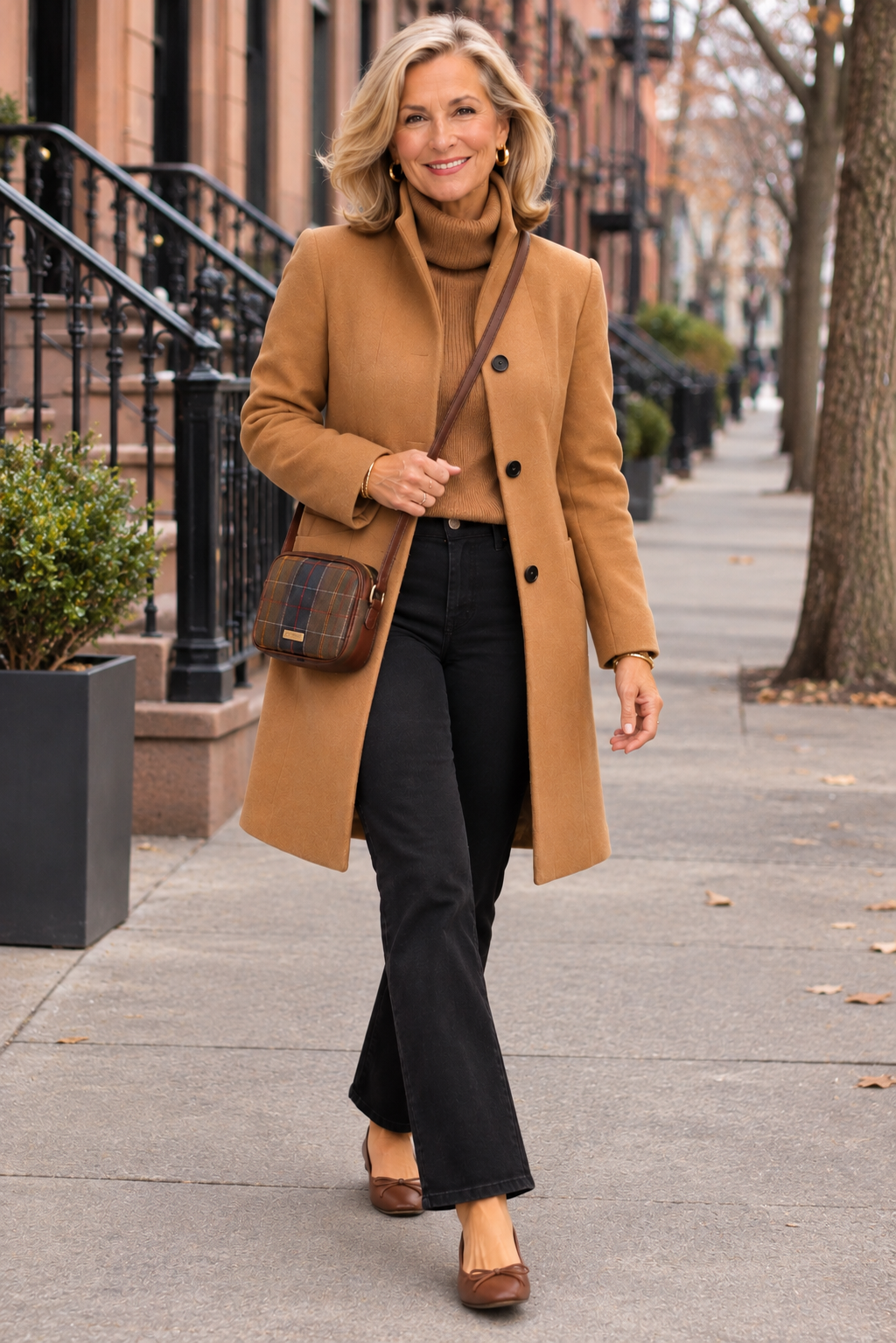
1. Get Familiar With the Winter Trends
First, let's talk about what's actually trending this winter because you can't incorporate trends into your wardrobe if you don't know what they are.
And no, you don't need to follow every trend that comes along.
A lot of the styles we're seeing are familiar clothes with updated fits, different details, or renewed popularity.
Here are some winter styles worth knowing about:
Wide-leg and relaxed jeans: Denim continues to move beyond the skinny jean. Straight-leg, relaxed, and wide-leg styles give you different options without having to wear anything exaggerated.
Funnel-neck and high-neck sweaters: Higher necklines are getting plenty of attention, including funnel-neck sweaters and half-zip pullovers. If you already own turtlenecks or mocknecks, you're not far from this trend.
Cardigans: From classic button-front styles to collarless knit jackets, cardigans are getting more attention as everyday tops and layers.
Corduroy pants: A familiar cold-weather favorite, particularly in straight-leg, relaxed, and wide-leg cuts.
Plaid: Plaid blazers, button-up shirts, and coats are worth revisiting, especially if you've been overlooking them in your closet.
Brown tones: Chocolate brown, espresso, and other deep browns are popular alternatives to black.
Burgundy: A rich winter color that works across sweaters, pants, handbags, and footwear.
You may already have several of these styles. The point isn't to collect them all, but to recognize what's current before deciding you need to shop.
2. Understand Which Fits Are Trending
One of the easiest ways to recognize current clothing styles is to pay attention to their shape.
For example, jeans aren't limited to one trending fit. Wide-leg, straight-leg, and relaxed denim are all relevant, giving you options depending on your body shape and preferences.
The same goes for pants. Wider cuts and relaxed tailoring are popular, but that doesn't mean every pair needs to be oversized.
With sweaters, you'll notice everything from relaxed knits to shorter cardigans and more fitted styles.
This is important because you shouldn't feel pressured to wear a particular silhouette just because it's trending.
A pair of wide-leg jeans that overwhelms your frame isn't necessarily a better choice than flattering straight-leg jeans.
The goal is to find current styles that work for your body, not force your body into every trend.
3. Take Another Look at Your Winter Sweaters
Before buying another sweater, check which necklines and styles you already own.
Turtlenecks, mocknecks, V-necks, crewnecks, and cardigans are all familiar winter basics. You don't have to replace them with the latest sweater trend.
However, there are a few details worth paying attention to.
Funnel necklines, half-zip sweaters, textured knits, and button-front cardigans are among the styles to consider this winter.
You may even have some of these pieces tucked away from previous seasons.
And if your sweaters are still in good condition and fit well, there's no reason to stop wearing them simply because they're older.
4. Don't Ignore Your Jeans and Pants
If there's one area of your wardrobe worth reviewing, it's your bottoms.
The shape of your jeans or pants can make a noticeable difference in how current your clothes look.
Straight-leg jeans remain a practical option, while relaxed and wide-leg denim offer other silhouettes to explore.
For winter pants, look at styles such as wide-leg trousers, corduroy pants, and relaxed tailored pants.
But don't assume that older automatically means outdated.
A pair of straight-leg jeans you purchased several years ago may still work beautifully. On the other hand, jeans with an awkward rise, excessive bunching, or a cut that no longer flatters you may be worth replacing.
And if you're still wearing skinny jeans, you don't have to throw them away. They're simply not your only denim option.
5. Pay Attention to Winter Shoes and Boots
Your footwear can have just as much influence on your winter style as your clothes.
Some of the styles worth considering include:
Loafers: Classic loafers, including styles with slightly more substantial soles.
Ankle boots: Chelsea boots and streamlined ankle boots with round, almond, or square toes.
Tall boots: Riding boots and other knee-high styles that work well for winter.
Sneakers: Simple, low-profile sneakers for everyday casual wear.
Ballet flats: A familiar flat that's still relevant, particularly when winter temperatures allow.
You don't need every shoe trend, and you certainly don't need to replace comfortable footwear that already works.
However, if you're still relying on the same shoes from years ago and they no longer complement the pants or skirts you wear, footwear may be one area worth updating.
6. Winter Dress Trends to Know
Don't leave dresses out of your winter wardrobe. Sweater dresses, long-sleeve midi dresses, and knit dresses are all styles to have on your radar this season.
Winter is the time to pay attention to heavier knits, warmer fabrics, and dresses that provide more coverage without looking bulky. A flattering sweater dress can be just as comfortable as your favorite winter sweater, while longer sleeves and hemlines make it easier to wear dresses throughout the colder months.
7. Explore Winter Colors Beyond Your Usual Favorites
If your winter wardrobe consists mostly of black, navy, and gray, you don't have to abandon those colors to dress trendier.
But you might enjoy introducing a few others.
Chocolate brown, burgundy, olive green, and deep red are worth considering for winter. And if you already own these colors, you're ahead of the shopping list.
Even traditional neutrals like camel, cream, and gray remain useful.
What's worth reconsidering is whether you've been limiting yourself to the same color combinations.
You may have several colors in your closet that you've never thought to wear together.
Winter Outfit Ideas for Women Over 60
Knowing which winter styles are trending is one thing. Figuring out how to wear them with the clothes you already own is another.
That's where my Winter Outfit Ideas Guide comes in.
The guide includes 31 winter outfit ideas featuring familiar clothing styles, including everyday basics you may already have in your closet.
You don't need the exact clothes shown to use the guide. You can substitute similar pieces from your own wardrobe and explore different ways to wear what you have.
Before you spend money replacing your winter wardrobe, see how much more you can do with the clothes you already own.